Monday, October 15, 2012

The valley of longevity


We arrived by bus (16 hours) to Vilcabamba, Ecuador. This is an Andean village in southern Ecuador that lies in a historical and scenic valley surrounded by Mandango Mountain. It's known as the Valley of Longevity because there were claims of it's many inhabitants to have reached over 100 years old. Much research was done on the reason for such a long life expectancy in Vilcabamba. Researchers attributed it to medicinal qualities found in fruits, roots and herbs near the equator, the mineral rich local drinking water found in Vilcabamba, healthy lifestyle and good treatment of the elderly in the community. Unfortunately, as time went on  and Vilcabamba's international popularity grew many researches fell skeptical and continued to study the reasons for longevity. Two particular scientists discovered that there were errors in the data. The errors were that villagers were exaggerating their age and as they grew older the greater the exaggerations became. The other error was the use of identical names in the village. The two researchers concluded that life expectancy in Vilcabamba was actually  a little less than  in the U.S. Despite these findings, Vilcabamba has attracted many tourists as well as expats from all over the world. The quiet , beautiful landscape, the abundance of fruits and vegetables, the relaxed way of life and the low cost of living has actually brought  expats in droves and hiked up real estate prices. There are gated communities in Vilcabamba with $3 million  homes. Prime real estate are lots in the mountains with 360 degree views of the mountains.


We arrived in Vilcabamba on a Friday night. The small town square is surrounded by cafes and restaurants , some owned by local Ecuadorians, some owned by expats. There are a few stores and boutiques as well as bakeries. The faint sound of big band music playing in the background, gringos sitting at street side cafes, everyone speaking English. It was like a scene from the "Twilight Zone". It was very surreal after traveling through  many countries in South America. It felt like a small rural town in America trapped in 1970. The presence of ¨"hippy backpacker" types was evident. Not that there´s anything wrong with" back packers", it´s  the dread locks and the Bob Marley hat along with the hand woven man-purse you're wearing and brightly colored striped pants that identifies you as a "hippy backpacker".


We hopped into a pickup truck cab and went to our hotel, Hosteria Izhcayluma. It was a property on a hill overlooking the mountains and the valley. Our room was very rustic , like a cabin in the woods but nicer, on the level of a hotel. It was rated high on Trip Advisor. The room cost $35 for a queen and a bunk bed with a shower made of big stones. It was night when we arrived so we had no idea how beautiful the property was until we awoke to the breathtaking views.Our hotel had a restaurant, swimming pool, a pool table, ping pong table , lawn chess, a book exchange, board games, spa for massages, mani's and pedi's and laundry facilities. This was the kind of place where you could stay and just relax and not have to go anywhere. We decided this was finally the opportunity to do just that. For the last 3 months we have been on the go trying to see everything we could see. We really needed some  R&R from our travels. We stayed for  a week. We had planned on just staying 3 days and then moving on to Cuenca but we kept postponing our bus tickets. This place has been known to suck people in. I was reading some travel posts on the internet and other people have said the same thing. An interesting thing that also attracts people to Vilcabamba is that it is considered a"spiritual " place. Every hotel, cafe or store that had a bulletin board was covered with flyers for reiki massage, metaphysical healing ,meditational meetings, and sweat lodges. So not only are there hippy backpackers but many new -agers seeking something that they will never find.

one of many paths at Izhcaluma Hosteria


View of the restaurant and common area


View of private rooms where we stayed, 4 rooms to a building


View from a bench on the property overlooking the valley


Another great view from the property, see some of the million dollar homes in the distance


Lawn Chess


 We went horseback riding into the mountains.I could only spare two hours because we left the baby with the older boys.We rode on trails in the woods and around the village. I have not been on a horse for about 20 years and my anxiety was kicking in . I finally got comfortable the last 15 minutes of the ride. The husband and kids went on a four hour ride to a waterfall and onto the top of mountains and down. They said it was terrifying but exciting climbing down steep cliffs on a horse. They made it back safe and we were all sore the next day.


Wednesday, October 10, 2012

Lima for a moment

After almost a month an a half of living in Peru, we have moved on to explore new territory in Ecuador. We started to feel very at home in Lima and were almost sad to leave. We convinced ourselves that we would be back soon and somewhat hesitantly packed up our suitcases and boarded our bus.

During our time in Peru , we made it a point to assimilate and live like locals. We experienced  living in a cosmopolitan city on the ocean in a progressive and developing country,yet with 3rd world standards. There are neighborhoods in Lima where you will find five star restaurants, hotels , upscale westernized malls and sidewalks so clean they shimmer. Beautiful parks with ocean views with families picnicking on the lush grass. Nicely dressed workers eating lunch at street side cafes, upscale boutiques and bookstores filled with art books and literature. Drive 10 miles to another neighborhood and you find little mom and pop restaurants where meals are just $2.00,  they just rinse the plates clean with water, bathrooms with no toilet paper and soap, let alone a light to see what your doing.

 We fell upon a flea market which started out to be fairly normal with sock vendors and food vendors. We traveled a few blocks inward and came upon a street with people selling used furniture,clothing and other junk out of little trailers. Two more blocks in we came upon streets literally filled with garbage. People hustling around with trailers full of plastic bottles, metal scraps, and glass bottles. People throwing garbage into trucks, garbage stacked in homes to the brim. I was pushing the baby in a stroller and was struggling to get through without running over garbage. I felt like we had stumbled on  a top secret area and we were not welcome. People were looking at us like why are these "gringos " here? It took a few minutes to navigate safely out of this "garbage corridor".
There is definitely a high contrast between the haves and the have nots, and unless you venture out of tourist designated areas , you may not ever see the other side of Lima.

 The government is making a very concerted effort to improve the city to make it appealing to tourists. They truly understand the importance of a "Tourist " driven infrastructure. There is a separate division of police called the "Tourist Police". They are found on every corner in  tourist areas and you will find officers who speak English. As a tourist if you have an incident or a question , you call on the "Tourist Police".  With them being on every corner , this creates a sense of safety.The designated "tourist neighborhoods " have higher sanitation standards then the un- typical tourist areas. Clean sidewalks and clean bathrooms . The parks and attractions have the same standards inside the fenced in boundaries. Step outside the fence and it's a different story. We went to this park called Parque Reserva. It had beautifully manicured grounds with over a dozen water fountains with lights and music. We had never seen anything like it! The main attraction was a huge dancing fountain with a holographic laser light show with music. It cost a dollar per person to get in. You would only expect something like this at Disney World!

Interesting discoveries :

Driving in Lima is a skill which takes patience, assertiveness and a gentle spirit.  No one follows the traffic signs or stays within the lines. There is a certain understanding between the drivers in Lima as far as right of way goes. People drive really aggressively and crazy and yet we saw no accidents the whole time we were in Peru. I still don't get it and if I lived in Lima, I would abandon my license to drive in a heart beat.

Shopping in Lima is compartmentalized by area. Most people don't shop at the mall or big box stores here. You go to the mercados which are scattered around the city in different neighborhoods. So if you want to shop for hardware, you go to the hardware area of the city. You will find blocks , maybe 4 square blocks of small independently owned  shops of hardware supplies. For our son's second birthday we went hunting for a pinata.We happen to come across the party supply area of maybe 6 blocks. Store after store filled with pinatas,balloons, party favors and decorations. If you want computers or anything related , you go to the computer area and find 10 square blocks of computer vendors. I'm just throwing numbers out there for example, but you get the idea. Do you want copies or posters made of photos you took on your honeymoon? Believe or not there is a "Gigantic fotocopias" area of the city!  If you go to a shopping area for let's say,  a new pair of shoes, you go to the shoe area and find the 10 square blocks of shoe vendors. The weird thing I found is that every single vendor will have almost exactly the same inventory of shoes. You have to scavenge through hundreds of the same looking shoes to find something different. This could take all day long !Why would you set up shop next door to someone who is selling the exact same thing?And on top of that, they may decide to use the same business name and logo too and get away with it! Some how these shop owners manage to stay in business in this direct competition market.


There is a system to buying things. When you go to a drugstore for example,you ask the clerk for the item you need, they give you a piece of paper with the item number written on it, you go to the cashier and pay, you then bring the receipt back to the clerk you originally spoke to  and she then gives you the package and staples the receipt to your bag. This process occurs in bakeries, clothing stores, cafes, ice cream parlors,  etc..

Making a phone call in Peru is not easy. We had a cell phone to use within Peru and a land line for local calls. I have attempted to make phone calls on several occasions for business purposes and was successful maybe 1 or 2 times. Sometimes the phone works , sometimes it doesn't.

As much as Peruvians love babies, it's really hard to find baby friendly amenities . What I mean by this is, diaper changing stations, stroller friendly buildings equipped with ramps and high chairs at restaurants are pretty much non-existent. I've developed a real skill of changing the baby while he's standing . The older boys know the protocol of lifting the stroller up stairs.

Traditions remain intact despite a modernizing world. Such traditions in cooking, dance, celebrations, music,handicrafts and clothing derived from Spanish and indigenous roots are passed on from generation to generation.  If you look around you see it, hear it, taste it, it's incorporated into every day life.

We fell in love with Peru because of it's beautiful geography, the ocean and the mountains. We love the diversity of the cuisine and the richness of traditions and culture. We love the quirky systems that really work. We especially love the way Peruvians make visitors feel welcomed and appreciated . Peru was starting feel like home and we will definitely be back  someday soon!
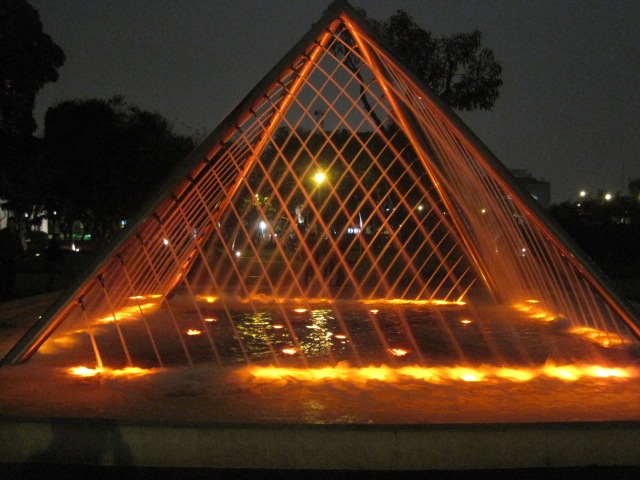


The Magic Water Circuit


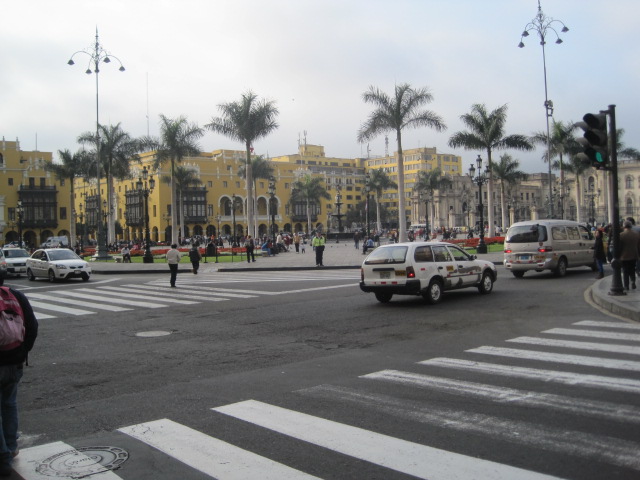
Beautiful colonial architecure in the central plaza of Miraflores
The Presidential Palace
 
 
Central Plaza in downtown  Lima


Ceviche
 
 
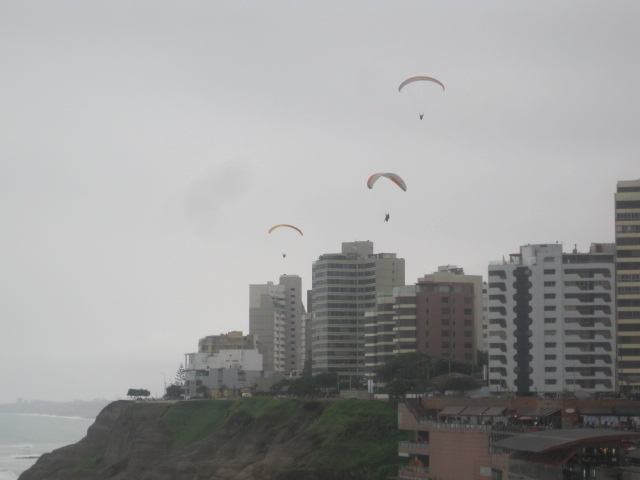
Skyline of Miraflores with parasailors
 
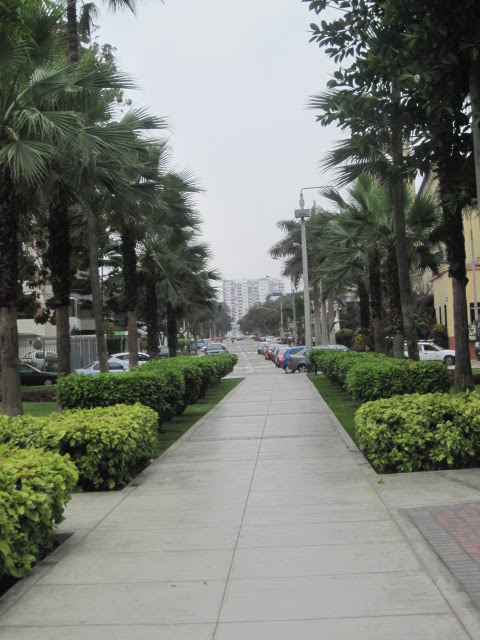
Clean sidewalks in Miraflores
 
 
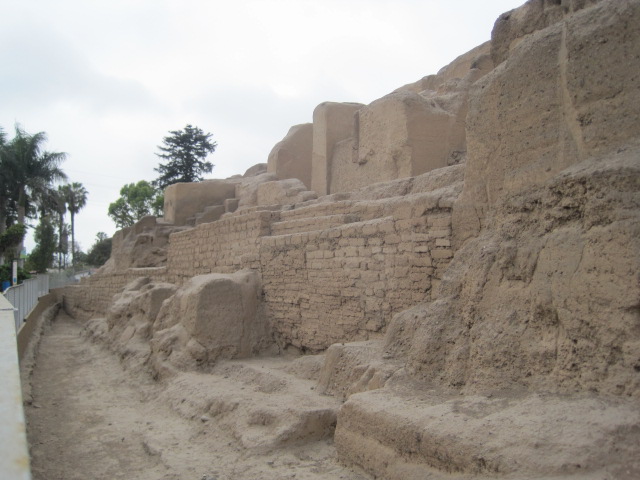
Ruins around the zoo


Ruins scattered throughout the zoo
 
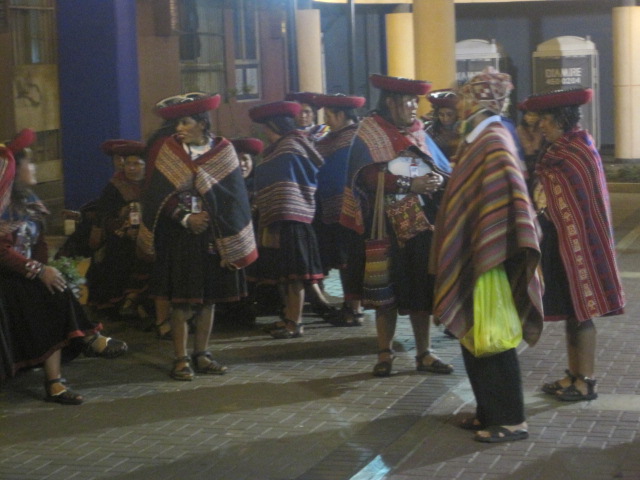
Traditional clothing from an Andean village. I think they were from Cuzco .Every village dresses differently.


Thursday, September 13, 2012

A foodies "Food Heaven"

We had the pleasure of attending an international food fair in Lima called "Mistura". This is the largest festival in Latin America to celebrate and showcase Peru's culinary traditions, biodiversity , rustic kitchens, acclaimed restaurants as well as farmers, chefs, bakers and food vendors. If you've ever gone to a "Taste Fest" in a larger city at home, it is the similiar concept, but so much more! There were more than 30 restaurants, 53 food trucks and numerous rustic kitchens selling two of their best items on their menus. Each sample sized meal averaged around $3.50. There was a Grand Market with vendors selling artesanal cheeses, breads, fruit juices , coffee, tea,cereal etc. There were farmers selling their potatoes, chili peppers, rice, quinoa, amaranth and more.Things that we buy back home at Whole Foods for top dollar, are here in Peru in abundance, for pennies! Quinua is a staple like potatoes here in Peru. We purchased a 500 gram bag of RED quinua flakes which you boil to make hot cereal, for $2.50. We purchased 5 lbs of organic potatoes that are purple inside for  $3.00. Quinua,  Maca , Amaranth, Sachi Inchi, and Tarwi have been a part of Peruvian culture and nutrition since ancient times.These "superfoods"have been rediscovered and are now in demand by international markets. In the center of the Grand Market was an informational exibit on all the "supergrains". I had no idea how beautiful the Quinua plant was! Take a look:


CHOCO-SUSHI


BOILED CORN -EATEN WITH FARMERS CHEESE


CHURROS STAND WITH MULTIPLE FILLINGS


QUINUA VENDOR


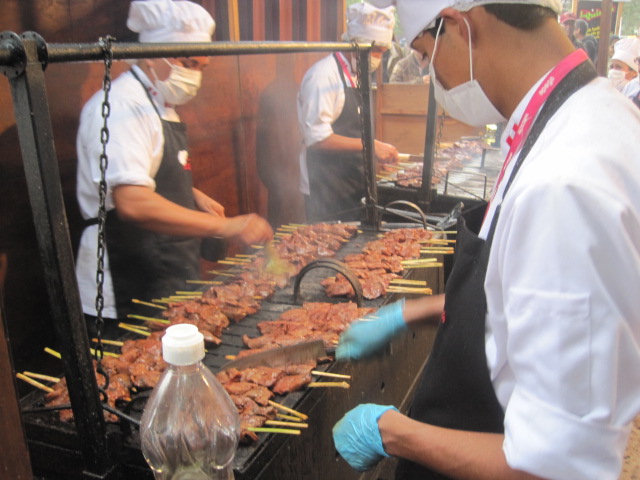
ANTICUCHO-GRILLED MEATS ON SKEWERS
 
 
PACHAMANCA- TRADITIONAL DISH COOKED IN THE GROUND USING HOT BRICKS
 
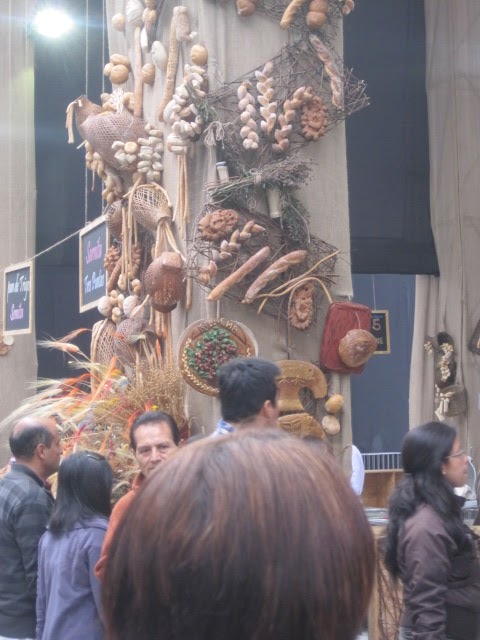
BREAD MARKET
 
CHANCHO-GRILLED PORK OVER WOOD


ICE CREAM MADE THE OLD FASHIONED WAY


Thursday, September 6, 2012

After several vertigo inducing bus rides....

It's been a few weeks since I last posted. I had to do some troubleshooting because I was unable to edit and post content here. Surprisingly, as" un-tech" savvy as I am, I think I resolved the issue!

After two 20 hour and one 15 hour bus rides through the Andes mountains, we are now in Lima, Peru. The area we are staying in is called Miraflores. Miraflores is a larger residential neighborhood on the south side of Lima bordering the Pacific Ocean. There are many parks, restaurants, shops and brand-new high rise apartments. I was pleasantly surprised to find a very modern, cosmopolitan Lima.The colonial architecture is preserved in the numerous plazas scattered throughout the city. It definitely does not feel or look third world. Talking to locals about the changes and growth in Peru occurring every year, it's evident that things are getting better. Real estate is very expensive and appreciating at a very high rate. The apartment we're renting for a month would sell for $250,000. It has 2 bedrooms, 2 baths, den, maids quarters w/bath, 14th floor city view with balcony and it's a few blocks near the ocean. For us to rent for a month, it's a steal at $30 a day, utilities included. A hotel in Lima for a family of five runs around $115 a night. Here are some photos:

BALCONY VIEW


Pacific Ocean

Miraflores city skyline and mall built on the side of a cliff


Cathedral in Miraflores town square


TIP #1 FOR LIVING LARGE IN LIMA:


Rent a furnished apartment in an ideal location instead of a hotel.

I highly recommend using www.rooomorama.com or www.airnb.com to find a short term lease apartment.  You can rent by the day, week or month. The sites are very detailed with photos and maps.You can also google short term apartments with the city to find listings. We usually pick an apartment based on the proximity to the center of town, safety , is there a grocery store nearby, restaurants and shopping. We also now know to ask if the kitchen is fully equipped. We learned this most recently as a matter of fact! We were all excited to try our hand at Peruvian cooking. We discovered that our fancy looking kitchen contained two frying pans and one stock pot with non stick coating so scratched up that they were no longer nonstick! And, ONE plastic spatula that had been melted to resemble a bubbly, blob of plastic! That''s all! We talked to the real estate agent who rented to us and showed her how unequipped the kitchen was. She said she had been meaning to buy new pans but never got around to it. The next morning she delivered brand new pots and pans and cooking utensils. Thank goodness! Now were able to cook up a Peruvian storm without the Brain Cancer!

TIP#2 FOR LIVING LARGE IN LIMA:

Cook at home in your rented furnished apartment.

Traveling is all about the food! I love researching about regional food and then seeking it out in restaurants. It's always a fun challenge to recognize names on a menu [in Spanish] from my  research. Unfortunately, eating out can be expensive. If you at least cook breakfast at home, the savings will be good. We generally eat two meals at home.

 Grocery shopping in foreign countries is rather exciting. Seeing unusual ingredients and reading labels in Spanish is all part of fun.  The selection of fruits and vegetables in Peru is amazing!
There are around 4200 varieties of potatoes and 55 varieties of corn alone. We have been truly enjoying the abundance and balance in our diet. To top it all off, food is really cheap here in Peru.

TIP #3 FOR LIVING LARGE IN LIMA:

Shop like the locals do.


The grocery stores that are near to our apartment are beautiful! The first grocery store we went to was two levels and had a moving ramp for your cart. The shelves were perfectly merchandised and the floor was so clean you could eat off  of it.  I discovered that every Saturday in our neighborhood there is an organic farmers market held in a park.We bought 2lbs. of  broccoli for $2.50. The very best deals are found at the closest "Mercado". These are usually in the city center ,open air and very large. It is a one stop shopping trip for locals. Here are some lively photos of the "Central Mercado" in Lima:


TIP #4 FOR LIVING LARGE IN LIMA:

Eat where the locals ,or as they call themselves; limans eat.


There are restaurants on every corner to fulfill every craving. Take it from a self proclaimed gastronome, "Gastronomy" is the buzzword that's on every one's mind. If you want to dive in to culture and experience traditional, regional cuisine your gonna have to ask the locals where they eat. Tucked in between the chain restaurants and the tourist traps are these tiny , little mom and pop diners.
They don't even have a name!  What you will see is  a "menu of the day" which is usually written on  a dry erase board hanging outside the door. The best deals are for lunch, since that is most Peruvians largest meal of day. The menu consists of  the soup of the day, a choice from several different entries, a dessert and a drink. The entries are always traditional Peruvian dishes. The best part is that it will cost you between $2.50- $5.00. How's that for living large?


Lomo Saltado -a very popular Peruvian dish

Tallarin with chicken and vegetables


More food photos to follow............